
Should I Hire an Executive Coach? Signs You're Ready
By Steve Simonson
Not sure if executive coaching is right for you? Here are 10 clear signs you're at the inflection point where coaching will actually work — and a few signs you're not ready yet.
You've been considering executive coaching for weeks — maybe months. You've read articles, browsed coach websites, and perhaps even had a few exploratory conversations. But you're still not sure if now is the right time or if coaching is really what you need.
This hesitation is normal. Executive coaching represents a significant investment of time, money, and emotional energy. Making the wrong decision means either missing an opportunity for breakthrough growth or wasting resources on something you're not ready to fully utilize.
So how do you know if you should hire an executive coach? More importantly, how do you know if you're ready for coaching to actually work?
Let's cut through the uncertainty with clear signs that indicate you're at the right inflection point.
The Fundamental Question: What Is Executive Coaching Actually For?
Before we dive into readiness signs, let's clarify what executive coaching is — and isn't.
Executive coaching is for leaders who:
- Have significant responsibility and decision-making authority
- Face complex challenges without clear "right answers"
- Want to accelerate their development beyond what experience alone provides
- Need a confidential thinking partner for high-stakes situations
- Are willing to examine their own behaviors, beliefs, and blind spots
Executive coaching is NOT:
- Therapy or counseling for personal psychological issues
- Consulting where someone tells you exactly what to do
- Mentoring from someone further along your exact career path
- A quick fix for deep organizational dysfunction
- Training on specific technical skills or knowledge
Understanding this distinction is crucial. If you're looking for therapy, hire a therapist. If you need strategic consulting, hire a consultant. If you want technical training, find a course. But if you're a leader who wants to become more effective, make better decisions, and develop capabilities that will serve you throughout your career — that's what coaching is designed for.
10 Clear Signs You're Ready for Executive Coaching
1. You're Facing a High-Stakes Transition
You've just been promoted to CEO, taken on a new C-suite role, or are preparing for a major career transition. The playbook that got you here won't get you there. You feel the weight of new responsibilities and know you need to evolve quickly.

Transitions are windows of maximum leverage. New roles come with grace periods where people expect you to be learning and adapting. Coaching during transitions helps you establish effective patterns from day one rather than developing bad habits you'll need to unlearn later. Coaching addresses: clarifying your leadership brand and priorities in the new role, building relationships with key stakeholders strategically, avoiding common pitfalls in the critical first 90 days, and developing the new capabilities your expanded role requires.
2. You're Scaling Your Business and Hitting a Ceiling
Your company has grown significantly, but you're starting to feel like growth is stalling. The systems and approaches that worked at $2M aren't working at $10M. You're working harder than ever but getting diminishing returns.
Business plateaus are often leadership plateaus in disguise. The CEO who can start and build a company to $10M needs different skills than the one who can scale it to $50M. Recognizing this gap means you're ready to address it. Coaching focuses on identifying which aspects of your leadership need to evolve, building systems and processes that scale without you, developing your leadership team to carry more weight, and transitioning from founder mode to CEO mode.
3. You Feel Isolated in Your Decision-Making
The higher you've climbed, the lonelier it's become. You can't discuss your biggest concerns with your team, your board has their own agenda, and your spouse doesn't fully understand the business challenges you face. You're making critical decisions without anyone to truly pressure-test your thinking.

Isolation is one of the most dangerous aspects of executive leadership. When you have no one to challenge your assumptions or offer perspective, blind spots become craters. Your willingness to acknowledge this isolation means you're ready for a confidential thinking partner. Coaching creates a safe space to explore your concerns and uncertainties, pressure-test strategies and decisions before implementation, identify blind spots you can't see on your own, and process the emotional weight of leadership without burdening your team.
4. You're Repeating the Same Mistakes
You keep hiring the wrong people, or avoiding difficult conversations, or making impulsive decisions under pressure. You recognize the pattern, you know it's costing you, but you can't seem to break the cycle on your own.
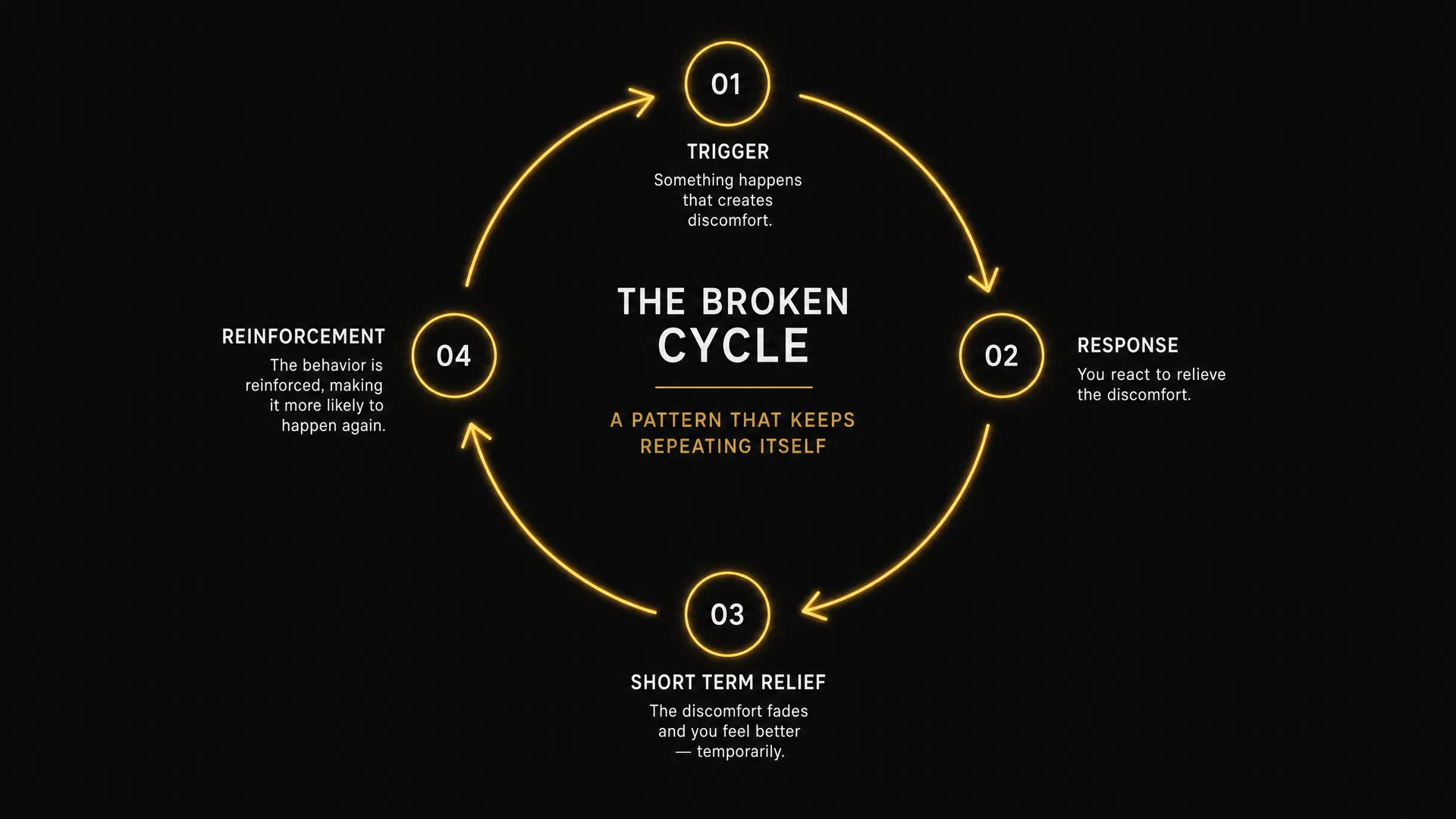
Awareness of patterns is the first step to changing them — but awareness alone isn't enough. You're ready for coaching when you're tired of knowing what you should do differently but not being able to execute the change consistently. Coaching uncovers the root causes driving your patterns, develops new behaviors and practices them in real situations, builds accountability structures that support sustainable change, and addresses the beliefs or fears that keep you stuck.
5. Your Team Isn't Performing at the Level You Need
Despite your best efforts, your leadership team isn't executing with the autonomy, ownership, and excellence you need. You find yourself micromanaging, redoing work, or stepping in to fix problems. You're starting to wonder if you're the common denominator.
The courage to ask "What am I doing that's contributing to this problem?" is a hallmark of coachable leaders. Team performance issues often reflect leadership gaps — in delegation, communication, accountability, or hiring. Coaching examines how your leadership style impacts team performance, develops your ability to delegate effectively and trust others, creates accountability without micromanagement, and builds a leadership team capable of operating without you.
6. You Know What to Do But Can't Get Yourself to Do It
You've read the books, attended the conferences, and have a shelf full of notes on what great leaders do. You know you should be more strategic, delegate more, develop your team, set better boundaries. But somehow, you keep slipping back into old patterns.
The gap between knowing and doing is where coaching creates the most value. You're ready when you recognize that more information isn't the answer — implementation and accountability are. Coaching identifies what's blocking implementation despite good intentions, creates systems and triggers that support new behaviors, builds accountability that actually drives follow-through, and addresses the mindset shifts required for sustainable change.
7. You're Preparing for a Major Inflection Point
You're considering a big move: selling the company, raising capital, entering a new market, restructuring the organization, or making a significant pivot. The stakes are high, and the margin for error is slim.

Major inflection points are when coaching delivers outsized ROI. The cost of making the wrong strategic decision or executing poorly on a critical transition far exceeds the investment in coaching. You're ready when you recognize that getting this right matters more than the cost of support. Coaching thoroughly explores options and implications before committing, develops your strategy and implementation plan with expert feedback, navigates the change process with your team and stakeholders, and manages your own leadership during high-stress transitions.
8. You Want to Accelerate Your Growth Trajectory
You're not in crisis. Things are going relatively well. But you're ambitious, and you know that trial-and-error learning is slow and expensive. You want to compress the time it takes to develop capabilities that typically take years to build through experience alone.
Some of the best coaching happens when leaders are proactive rather than reactive. You're ready when you see coaching as an investment in acceleration rather than a solution to crisis. Coaching identifies your highest-leverage development areas, builds capabilities that will matter in your next role — not just this one, expands your strategic thinking and decision-making sophistication, and develops your leadership philosophy and approach intentionally.
9. You're Getting Feedback You Don't Fully Understand or Know How to Act On
Your board, your team, or a 360 assessment has given you feedback that you're "too in the weeds," "need to be more strategic," "should communicate more effectively," or "need to develop stronger executive presence." You intellectually understand the feedback, but you're not sure what concrete actions would address it.
Vague feedback is useless without someone to help you translate it into specific behavioral changes. You're ready when you're willing to dig deeper into what the feedback really means and how to address it. Coaching unpacks vague feedback to understand the real underlying concerns, identifies specific behaviors to change or develop, practices new approaches and gets real-time feedback, and measures progress on areas that are often difficult to self-assess.
10. You're Surrounded by People Who Want Something From You
Your team wants direction and support, your board wants results and updates, investors want returns, customers want solutions, and your family wants more of your time and attention. Everyone needs something from you, and no one is asking what you need to be successful.
Leadership is inherently a giving role, but sustainable high performance requires support structures. You're ready when you recognize that having someone whose sole job is to invest in your success isn't selfish — it's strategic. Coaching creates space to focus on your own development and needs, processes the challenges of leadership with someone who has no agenda, develops strategies to meet demands without burning out, and builds sustainable practices that support long-term effectiveness.
Signs You're NOT Ready (And That's Okay)
Timing matters. Executive coaching works best when you're genuinely ready to engage. Here are signs that now might not be the right time:
You're in Crisis Mode. If you're firefighting every day and have no bandwidth for reflection or implementation, coaching won't work. You need to stabilize first. (Exception: coaching focused specifically on crisis leadership and stabilization can be valuable.)
You're Not Willing to Be Challenged. If you want someone to validate your current approach and tell you you're doing everything right, you need a cheerleader, not a coach. Effective coaching involves uncomfortable truths and pushing beyond your comfort zone.
You're Looking for Quick Fixes. If you expect transformation in 2–3 sessions or think coaching will magically solve problems without you doing hard work, you'll be disappointed. Coaching requires commitment and follow-through.
You Don't Have Decision-Making Authority. If you can't actually implement changes because everything requires approval from others, coaching will be frustrating. You need enough autonomy to act on insights.
You're Fundamentally Satisfied With Your Current Performance. If you genuinely believe you're already performing at your peak and have no significant areas for growth, you're either not ready for coaching or not self-aware enough for it to work.
What Being "Ready" Actually Means
Readiness for executive coaching isn't about having all your ducks in a row or being in perfect shape. It's about:
- Ownership: Recognizing that your results are ultimately your responsibility
- Humility: Acknowledging that you have blind spots and areas for growth
- Commitment: Being willing to invest the time and energy required
- Action-Orientation: Being prepared to implement changes, not just talk about them
If you're reading this article and recognizing yourself in multiple scenarios, you're probably ready.
The Cost of Waiting
One final consideration: what's it costing you to not have executive coaching?
Every day you operate with the same blind spots, make the same mistakes, or struggle with the same challenges has a cost:
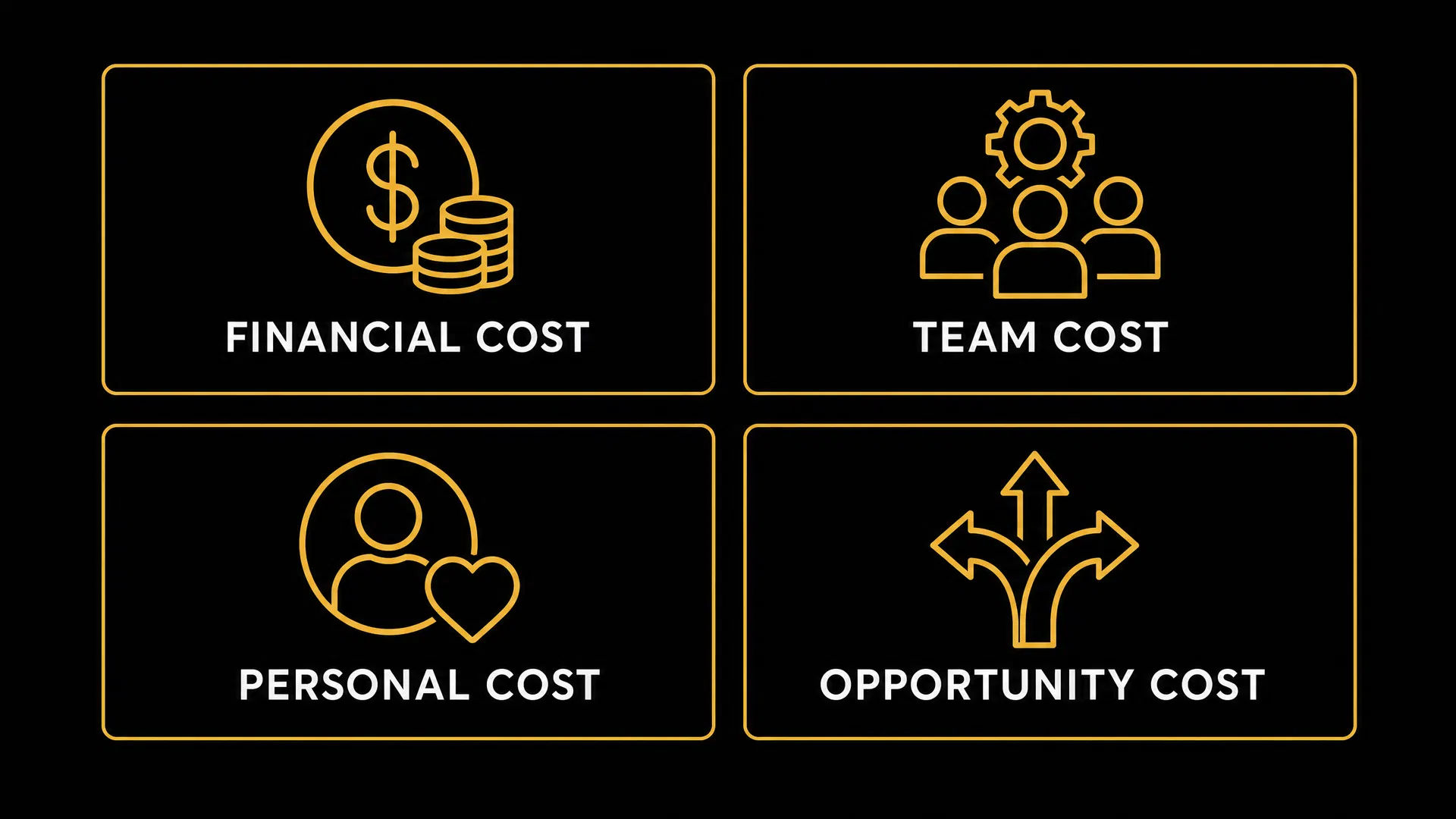
- Financial Cost: Revenue not captured, opportunities missed, bad decisions made
- Team Cost: Talent lost, relationships damaged, culture weakened
- Personal Cost: Stress endured, time wasted, satisfaction diminished
- Opportunity Cost: Growth that didn't happen, capabilities not developed
For many executives, the cost of waiting far exceeds the cost of coaching itself.
Making the Decision: Three Questions to Ask
If you're still unsure whether you should hire an executive coach, ask yourself these three questions:
1. "What am I trying to achieve in the next 6–12 months that I don't feel fully equipped to accomplish on my own?"
If you have a clear answer, coaching is likely valuable. If you can't articulate what you're trying to accomplish, that's actually a sign you need coaching to develop clarity.
2. "What would it be worth if I could overcome this challenge, develop this capability, or achieve this goal six months faster?"
If the value significantly exceeds the cost of coaching, the ROI is clear.
3. "Am I willing to be uncomfortable, receive difficult feedback, and do the hard work required to change?"
If yes, you're ready. If no, be honest with yourself and wait until you are.
The Catalyst88 Approach: Readiness Meets Opportunity
At Catalyst88, we work with CEOs and executives who are ready to take their leadership to the next level. Our ideal clients are ambitious — they're building something significant and want to accelerate their trajectory. They're coachable, open to feedback, and willing to examine their own contributions to challenges. They're action-oriented, implementing insights rather than just collecting them. And they're community-minded, recognizing the value of learning alongside peer executives.
We combine individual executive coaching with CEO mastermind groups because we've seen that leaders grow fastest when they have both personalized support and peer accountability.
If you're a CEO facing the challenges of scaling a business, building a high-performing team, or navigating a major transition — and you're ready to invest in your own development as seriously as you invest in your business — we should talk.
Take the Next Step
Still not sure if you're ready? That's actually a perfect reason to have a conversation.
Visit Catalyst88.com to learn more about our coaching programs and mastermind communities for CEOs. Connect with Steve Simonson for a candid conversation about whether coaching is right for you right now.
Sometimes the most valuable part of considering coaching is gaining clarity about what you actually need. Even if coaching isn't the answer today, understanding why can point you toward what is.
The best time to invest in your development is when you're ready to do something with it. Are you ready?