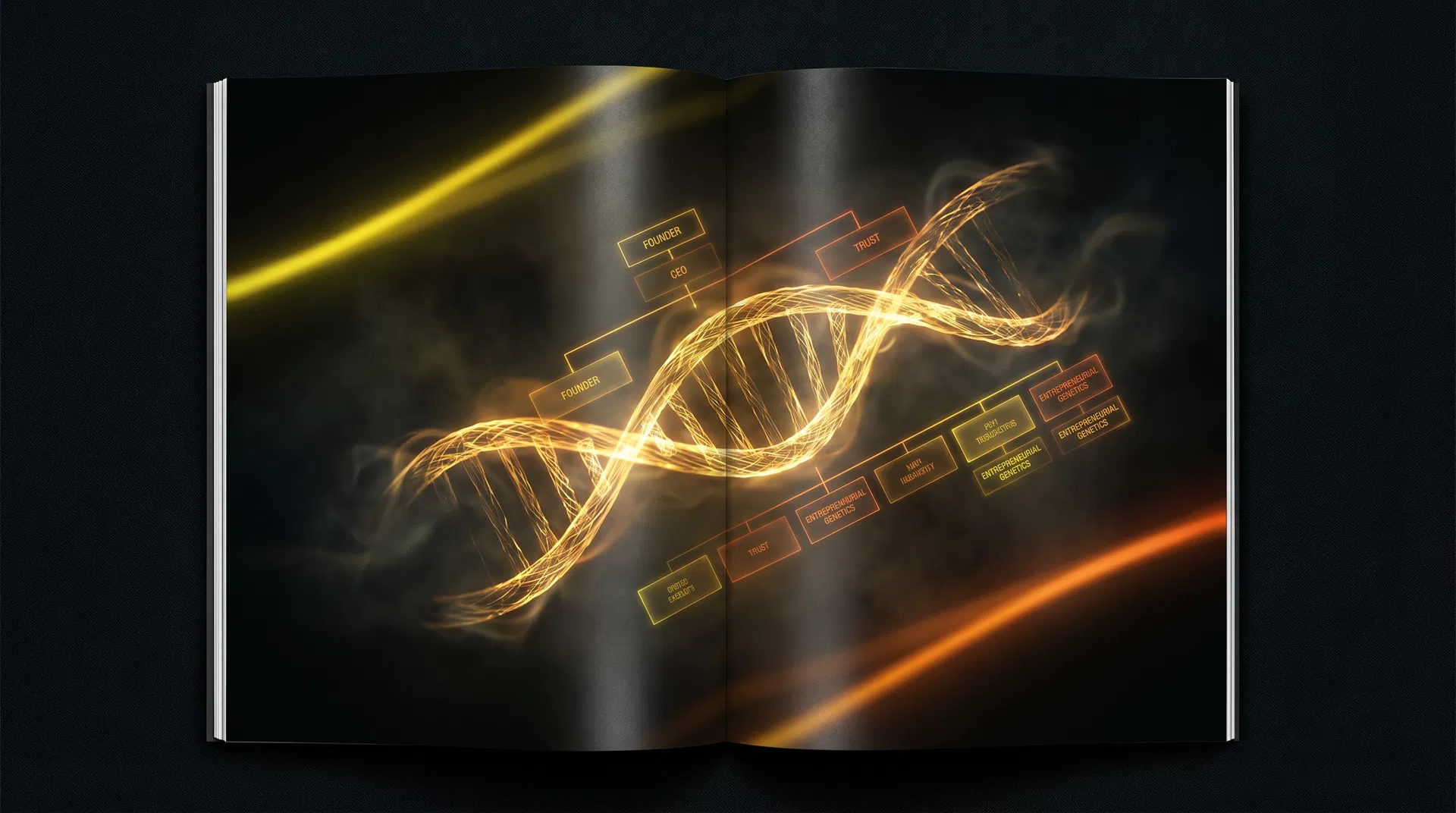
Leadership DNA for Operators: Systems, Judgment, Residue
By Steve Simonson
Not a biography—an operator checklist: systems over heroics, strategic objective over activity fog, future org chart, cash adult supervision, weekly residue.
Entrepreneurship attracts big personalities. Vision. Risk. Optimism.
What operators actually need at scale is less theatrical: judgment under uncertainty, systems that survive bad weeks, and the guts to make people decisions on time.
This post is not a biography. It is the leadership pattern I have learned the hard way—factories, brands, software, and founder rooms—and the checklist I still use.
Systems beat superheroes
If the company only works when you are the hero, you do not have a company. You have a dependency.
Leadership DNA that scales:
- write decision rights before the crisis;
- measure countervailing metrics (revenue with margin, speed with quality);
- design the org chart for twelve months ahead, not for your current ego;
- treat exceptions as system bugs, not personal favors.
Strategic objective over activity fog
Busy founders confuse motion with progress.
A useful weekly question:
> What is the one objective that, if moved, makes twenty other tasks less important?
If your team cannot say it in one sentence, you are running a task factory.
The future org chart
Hire for the company you are building, not only the fire in front of you.
That means:
- seats with scorecards;
- managers who own outcomes, not status slides;
- refusing to keep a wrong-fit executive because replacing them is uncomfortable.
People decisions delayed are strategy decisions delayed.
Scarcity, cash, and adult supervision
I care about cash more than applause.
Leadership that ignores cash conversion, inventory risk, channel concentration, and customer concentration is cosplay. Fancy culture language does not fix a surprise cash crunch.
Practical adult supervision:
- know your cash runway without opening five spreadsheets;
- know your top customer and channel concentrations;
- know which SKUs create work without contribution margin.
Trust is earned in the room
Founders do not “trust a coach” because of adjectives on a website.
Trust comes from:
- pattern recognition that matches their stage;
- willingness to create productive tension;
- confidentiality without content marketing their wounds;
- residue in 90 days—decisions made, not vibes improved.
If you are evaluating outside help, use How to Choose a CEO Coach as a selection tool—not a personality contest.
A weekly leadership checklist
- What decisions moved this week?
- What still routes to me that should not?
- Which metric pair am I gaming?
- Which people issue am I avoiding with strategy language?
- What did we stop doing?
Bottom line
Leadership DNA is not charisma. It is repeatable judgment plus systems that do not require your constant heroics.
Build the machine. Make the hard calls early. Measure residue.
More context on how I work with operators: Steve Simonson. For a peer room with standards, Chairman’s Circle.