
How Can a CEO Coach Help Me Accelerate Growth?
By Steve Simonson
You have revenue, a team, and proof the business works. So why does every decision still route back to you? A CEO coach helps founders escape the bottleneck, build delegation systems, and shift from operator to architect — faster than going it alone.
If you are searching, "How can a CEO coach help me accelerate growth?" you are probably not looking for another motivational speech.
You are probably already motivated.
You have customers. You have revenue. You have a team, or at least the beginning of one. You have proven that the business can work. And yet, somewhere along the way, the work got heavier than the growth. Every problem seems to route back to you. Every important decision needs your fingerprints on it. The business is moving, but it may not be compounding.
That is exactly where a CEO coach can help.
Not by giving you vague encouragement. Not by handing you a binder of generic business advice. A good CEO coach helps you install a better operating system for the next stage of the company.
At Catalyst88, we think about this through the lens of the Axioms: hard-won business principles for founders who have outgrown the hustle. The founder stage rewards speed, instinct, and personal effort. The scaling stage rewards clarity, systems, measurement, delegation, and disciplined iteration.
A CEO coach helps you make that transition faster.
The Short Answer
A CEO coach helps you accelerate growth by helping you make better decisions with better inputs, see the constraints you are too close to notice, build scoreboards so the business becomes measurable, delegate authority instead of just assigning tasks, turn motion into progress through disciplined iteration, cut complexity that is slowing the company down, and stay accountable to the work that actually moves the business.
That is the practical answer.
The deeper answer is this: a CEO coach helps you stop being the ceiling.
Growth Usually Stalls at the Operating System
Most founders assume growth slows because of a market problem, a people problem, a capital problem, or a marketing problem.
Sometimes that is true.
But often the real problem is underneath all of those. The business has outgrown the way the founder makes decisions, leads the team, measures performance, and allocates attention.
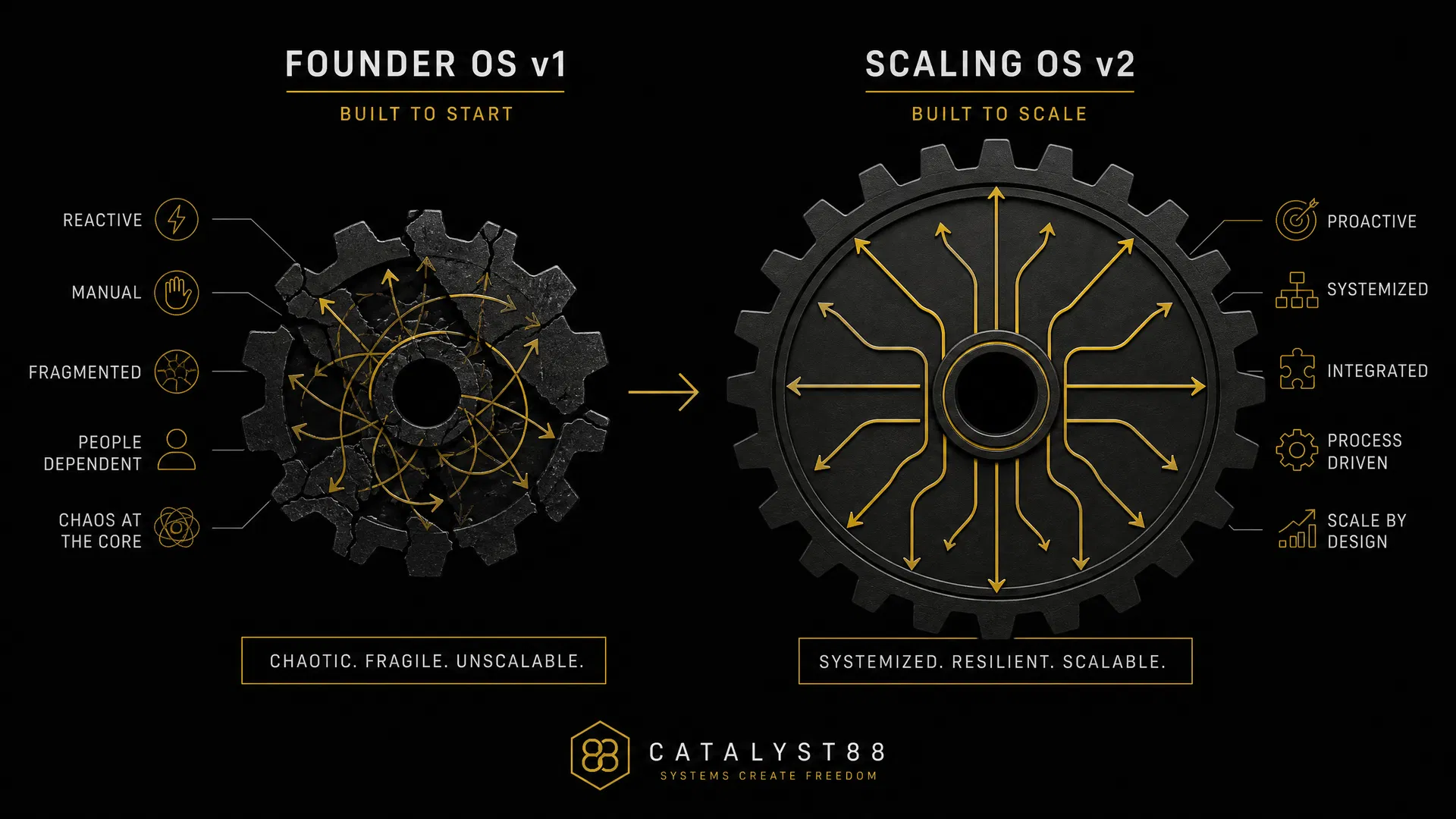
The habits that got you here can quietly become the habits that keep you here.
Early on, founder instinct is an asset. You can hold the whole company in your head. You know every customer, every product, every supplier, every cash crunch, every urgent fire.
Then the company grows.
Now the founder's head is no longer large enough to hold the whole business. The team waits for answers. Departments operate on assumptions. Metrics get fuzzy. Projects boomerang back to your desk. You work more hours, but the business does not move in proportion to the effort.
This is the messy middle. It is where many founders do not need more hustle. They need a better system.
A CEO Coach Helps You See What You Cannot See
One of the foundational Axioms is: "I don't know nuthin' about nuthin'."
It is not about pretending you lack knowledge. You have earned real expertise. The point is posture.
Founders get into trouble when they take hard-won competence in one domain and unconsciously apply it everywhere else. You may know your customer cold, but that does not automatically make you an expert in executive hiring, finance, org design, capital strategy, or operational systems.

A CEO coach gives you an outside mirror. The right coach can see patterns you are too close to notice: the decision you keep postponing, the metric nobody owns, the team member who has responsibility but not authority, the channel that feels good but does not produce profit, the recurring fire that is actually a broken system, the opportunity that is exciting but not worth the squeeze.
That outside perspective matters because founders are often surrounded by people who either depend on them, defer to them, or have learned which topics are not worth challenging.
> A good CEO coach is not there to flatter your instincts. They are there to sharpen them.
A CEO Coach Turns Gut Feel Into Better Decisions
Another Axiom is: "Data-driven decisions outperform emotional decisions in business."
Your gut is not useless. In fact, your gut may be one of the reasons the company exists. But at scale, gut instinct needs to become a partner to data, not a replacement for it.
A CEO coach helps you slow down the decisions that deserve discipline and speed up the decisions that are stuck in fog. That often means asking simple, uncomfortable questions: What decision are we actually making? What data would change your mind? What would have to be true for this plan to be wrong? What is the cost of waiting? What is the smallest test that would teach us something useful?
This is where growth acceleration often begins. Not with one giant breakthrough, but with dozens of better decisions made every month. Better pricing decisions. Better hiring decisions. Better product decisions. Better channel decisions. Better inventory decisions. Better capital allocation decisions.
Each one may improve the business by only a few percentage points. But those points compound.
A CEO Coach Helps You Install the Scoreboard
The Axiom says: "No score, no game."
If your team cannot tell whether they are winning, they are not really playing a game. They are just working.
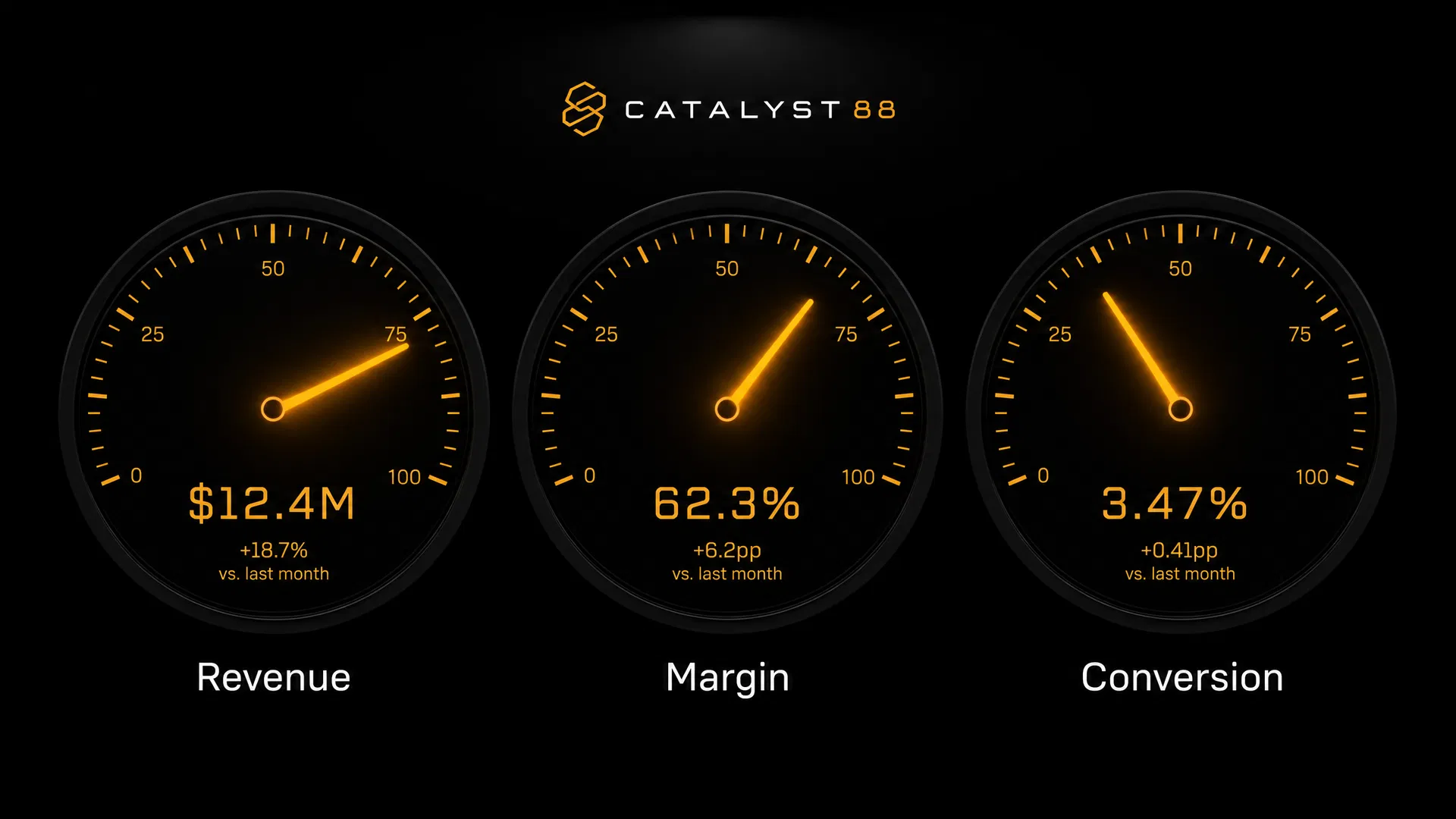
A CEO coach helps you identify the few numbers that actually matter in each function. Not a 73-metric dashboard nobody reads. The right two or three metrics per department, paired with countervailing metrics so the team does not accidentally optimize one number while damaging another.
For example: sales revenue needs margin discipline, customer service speed needs satisfaction or resolution quality, marketing lead volume needs qualified conversion, fulfillment throughput needs accuracy, and product launches need contribution margin and repeat purchase behavior.
The point is not measurement theater. The point is visibility.
> Once the score is visible, the business becomes coachable. The team can improve. Leaders can diagnose. The founder can stop running the company on vibes.
A CEO Coach Helps Remove You as the Bottleneck
One of the most expensive scaling problems is boomerang delegation.
You assign work to someone. They ask a clarifying question. The decision comes back to you. Then another one. Then another one. Soon the team is technically working, but the real progress is waiting in your inbox.
The Axiom says: "Beware of boomerang delegation."
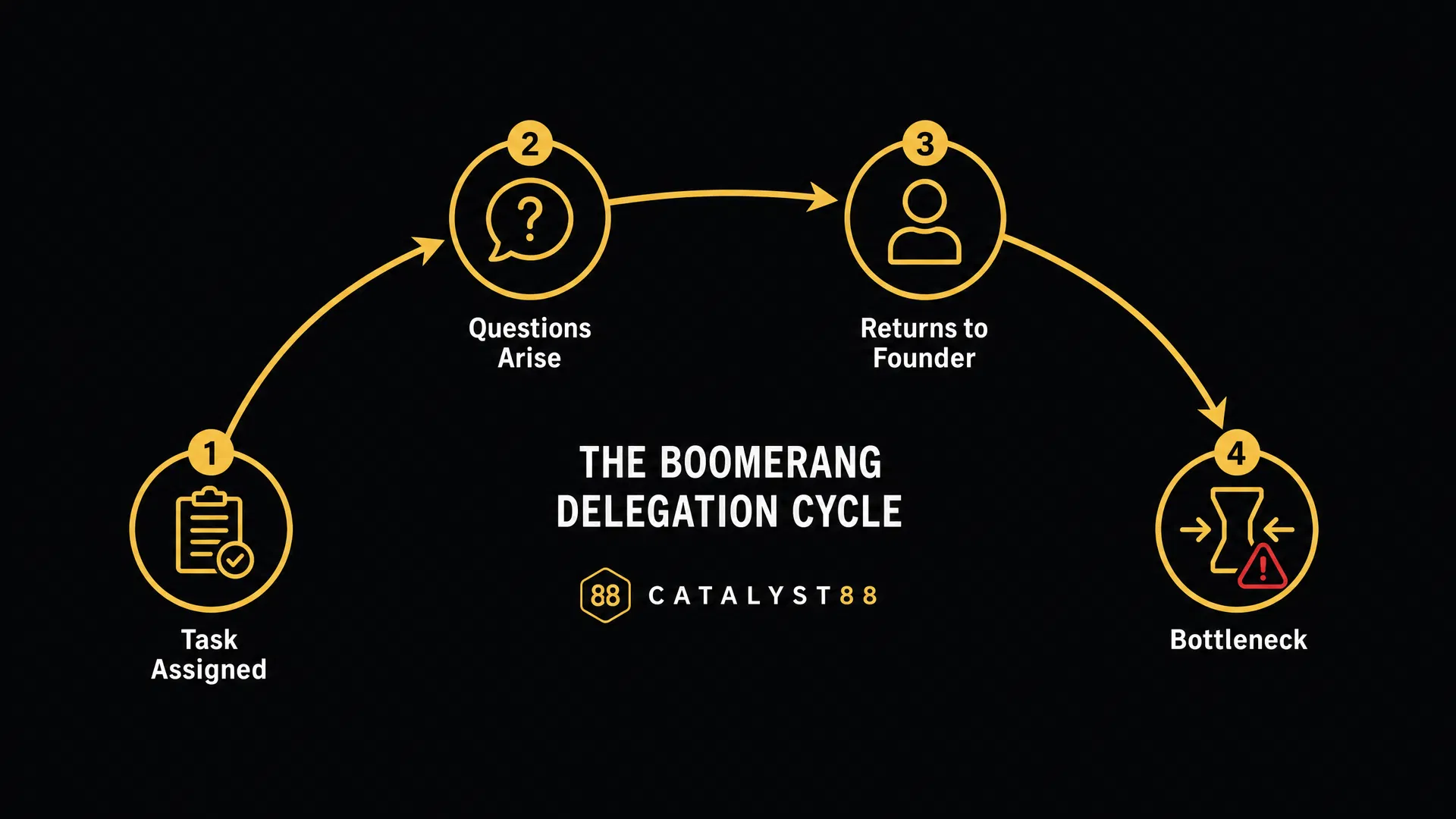
A CEO coach helps you find the places where you have assigned tasks without transferring authority. That distinction is everything.
Real delegation requires a named owner, a clear outcome, a timeline, resources, decision rights, and a protocol for what happens when the owner gets stuck. Without those pieces, the task will usually come back to the founder. Not because the team is lazy. Often because the system taught them that you are the safest place to send uncertainty.
Growth accelerates when decisions move to the level where the best information lives. Your people get stronger. You get capacity back. The business moves faster because it is no longer waiting for the founder to approve every meaningful inch of progress.
A CEO Coach Converts Motion Into Progress
Founders are rarely short on motion.
Meetings, calls, messages, launches, fires, vendor conversations, hiring loops, customer issues, financial reviews. The calendar is full. The days are intense.
But motion is not the same as progress.
The Axiom says: "Iteration is the key to perpetual progress."
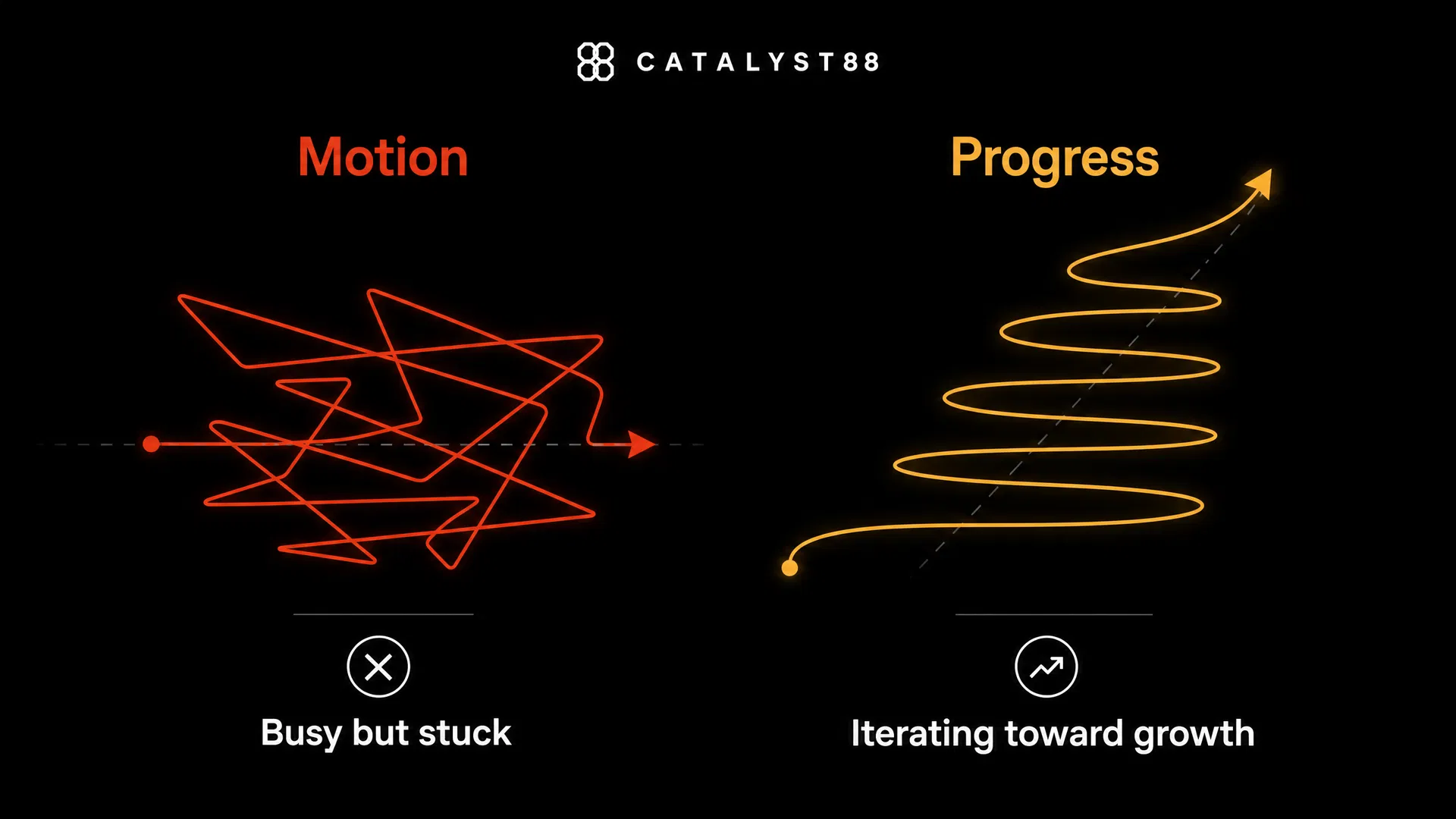
A CEO coach helps you build the loop: ship something, observe what happens, learn, improve, ship the next version. That loop applies everywhere — marketing campaigns, hiring processes, financial reporting, product development, customer experience, sales scripts, team meetings, and operating systems.
The founder who only works harder eventually plateaus. The founder who iterates gets compounding returns from the work already being done.
That is one of the quiet ways CEO coaching accelerates growth. It protects time for the work that permanently improves the company, not just the work that gets today back under control.
A CEO Coach Helps You Cut What Does Not Earn Its Keep
Growth is not only about adding.
Sometimes acceleration comes from subtraction.
The Axioms say: "Is the juice worth the squeeze?" and "Embrace the law of parsimony."

That means a CEO coach should help you ask: Does this initiative deserve the resources it consumes? Is this product line creating profit or complexity? Is this meeting producing decisions? Is this process still solving the problem it was created to solve? Is there a simpler version that produces most of the value with less drag?
Founders often die by a thousand reasonable yeses. Every opportunity sounds good. Every project has a case. Every initiative has a champion.
But scale requires focus. A good CEO coach helps protect the rare yes by forcing the merely decent yeses to defend themselves.
That discipline frees capital, calendar, and leadership attention for the work most likely to move the company.
The Best CEO Coaching Is Not Therapy for the Business
There is nothing wrong with needing a sounding board. Founders carry weight most people never see.
But CEO coaching should not stop at conversation.
The best CEO coaching produces visible changes in how the business runs: clearer priorities, better decision cadence, stronger dashboards, fewer founder-dependent workflows, cleaner delegation, more accountable leaders, faster learning cycles, and simpler operating rhythms.
In other words, the coaching should leave residue in the company.
> You should be able to look back after 90 days and see what changed. Not just what you thought about. What actually changed.
How Fast Can a CEO Coach Help?
That depends on the founder, the business, and the willingness to act.
Some improvements show up quickly. A clearer scoreboard can change the quality of a leadership meeting within weeks. Decision rights can reduce founder bottlenecks within a quarter. Better testing discipline can prevent expensive marketing or product mistakes almost immediately.
Other changes take longer. Leadership culture, executive hiring, operating cadence, and team accountability are not fixed in a single call.
But the right coaching relationship should create momentum early because it changes the founder's attention. And the founder's attention is one of the highest-leverage assets in the company.
Point it at the right constraint, and growth can move.
Is CEO Coaching Right for Every Founder?
No.
CEO coaching works best for founders who are willing to be challenged, willing to measure, willing to delegate, and willing to change the systems that made them successful up to this point.
It does not work as well for founders who only want validation.
The best coaching relationships require candor. Sometimes that means hearing that the problem is not the team, the market, or the economy. Sometimes the problem is that the founder is still operating the company like it is smaller than it has become.
That can be uncomfortable.
It can also be the beginning of the next level.
The Real Job of a CEO Coach
A CEO coach does not grow the business for you.
They help you become the kind of operator who can grow it.
They help you see the business more clearly, make better decisions, install better systems, delegate real authority, measure what matters, and iterate until progress compounds.
That is how a CEO coach helps accelerate growth.
Not by adding more noise. By helping you find the signal.
Not by making you dependent on advice. By helping you build a business that depends less on you.
That is the shift founders are really looking for.
Not just more growth.
Growth with a company that can carry it.
FAQ
What does a CEO coach do?
A CEO coach helps a founder or chief executive improve decision-making, leadership cadence, accountability, delegation, strategic focus, and operating systems. The best CEO coaching turns insight into changes in how the company actually runs.
Can a CEO coach help with scaling a business?
Yes. A CEO coach can help founders identify bottlenecks, install measurable goals, build stronger teams, delegate decision rights, and create repeatable systems that support growth beyond the founder's personal capacity.
When should a founder hire a CEO coach?
A founder should consider a CEO coach when the business is growing but the founder has become a bottleneck, the team lacks accountability, decisions are too reactive, or growth has slowed despite high effort.
What is the difference between a CEO coach and a business consultant?
A consultant often solves a specific business problem or delivers a defined project. A CEO coach works with the founder as the central leverage point, helping improve how the leader thinks, decides, delegates, measures, and scales the company.
How does CEO coaching accelerate growth?
CEO coaching accelerates growth by helping the founder focus on the highest-leverage constraints: better decisions, clearer metrics, stronger delegation, simpler systems, and faster iteration across the business.